 +34 967 142 011


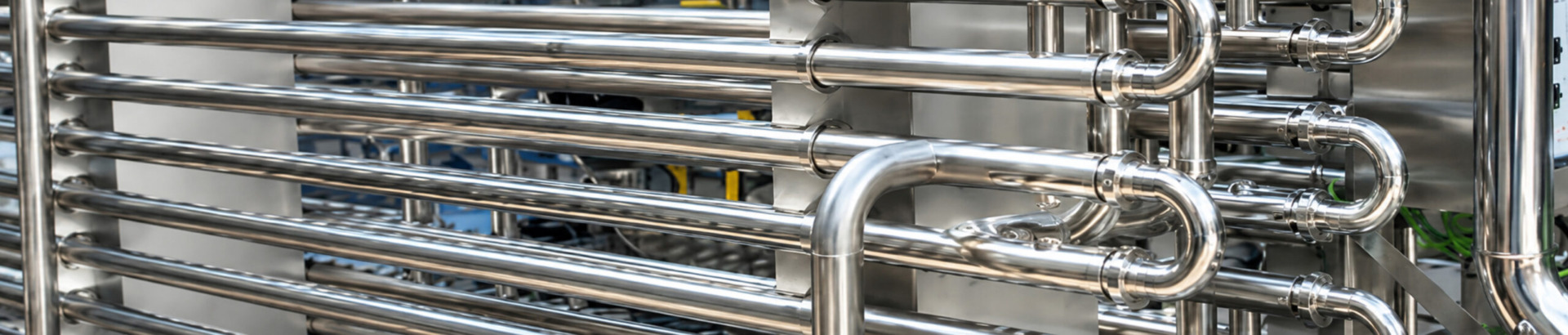




Heat exchangers
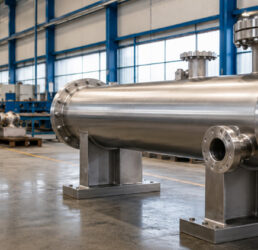
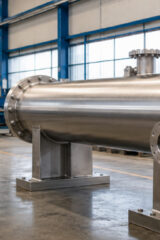
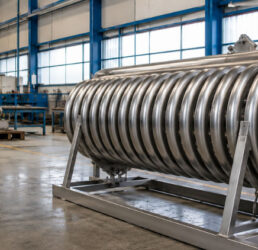
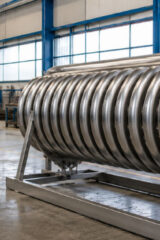
We build custom heat exchangers to couple into the client’s process: tube bundle, jacket, coil or half-pipe units, built to suit the duty, pressure, temperature, materials, applicable codes and real integration at the plant, with documentary control.
Heat exchangers for temperature control
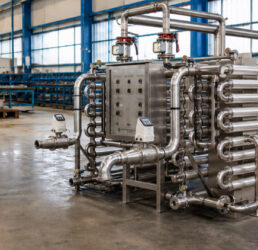
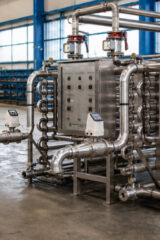

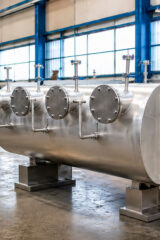
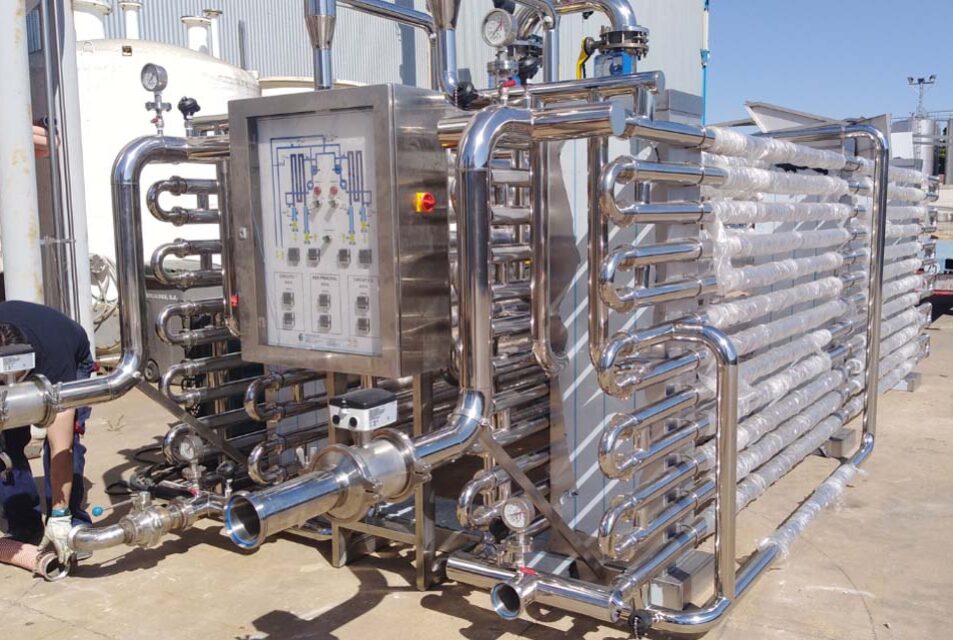
What defines our heat exchangers
A heat exchanger is an item of equipment designed to transfer heat between fluids without the process losing control. At Eurocalder we build this equipment from what the plant really demands: pressure, temperature, flow rate, cleaning, maintenance, materials, access and regulations. We apply design and manufacturing criteria such as TEMA, ASME VIII Div.1, EN 13445, PED or API 660 when the project calls for them.
We calculate every exchanger in-house with AutoPIPE Vessel, fine-tuning thicknesses, joints and requirements before building. Less improvising in the workshop, more control for the client.
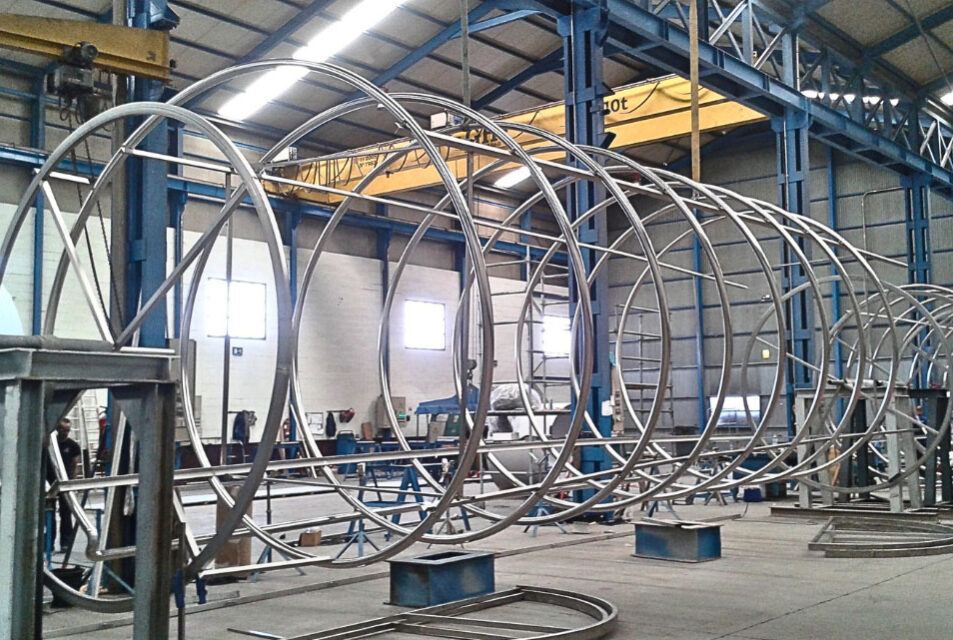
Where they are used
- In food plants, to heat or cool product.
- In wineries, to control fermentation and cooling.
- In breweries, to stabilise temperatures.
- In chemicals, to condition process fluids.
- In cosmetics and pharmaceuticals, for precise temperature control.
- In water and biogas, to heat sludge or circuits.


Why choose us

We define each exchanger according to fluid, flow rate, pressure, temperature and plant, so that the heat exchange runs with control and stability.

We build equipment ready for demanding conditions, taking care over welds, leak-tightness, pressure, temperature and the service life of the assembly.

We look after surfaces, flow paths, materials and connections to support heat transfer that is stable, safe and matched to the real process.

We stay alongside the client from the technical definition through to manufacturing, testing, transport and assembly, making sure the equipment is integrated precisely.


Want to know more about our heat exchangers?
Find out how we calculate, build, transport and assemble heat exchangers designed to answer every need for heat transfer, temperature control and performance.





Frequently Asked Questions
Yes. We build custom heat exchangers because every project brings different conditions of fluid, flow rate, temperature, pressure, available space, connections, materials, cleaning, maintenance or applicable regulations. Working this way lets us match the equipment more closely to its real duty, avoid inefficient generic solutions and achieve a more precise integration at the plant. The aim is for every item of equipment to answer what the client needs in their day-to-day process.
To define a heat exchanger properly we need to know the working fluids, inlet and outlet temperatures, flow rates, pressures, viscosity, fouling risk, required material, available space, orientation, connections, cleaning, maintenance and applicable regulations. With this information we can set out a coherent build, size the equipment with judgement and avoid standard solutions that later fail to perform in the real installation.
The most suitable material depends on the fluids, the temperature, the pressure, corrosion, hygiene, fouling and the expected service life of the equipment. On many projects we work with stainless steel for its strength, cleanability and good behaviour in the food, chemical, pharmaceutical and cosmetics industries. Other steels can also be used where the duty allows. The choice must always weigh up compatibility, safety and maintenance.
Yes. We can stay with the project beyond the manufacture of the heat exchanger, coordinating transport, assembly at the plant and maintenance whenever the client needs it. This continuity gives better control over the process as a whole, cuts down improvising on site and makes sure the equipment arrives, is installed and is put into service in a more orderly way. Our aim is for manufacturing not to end in the workshop, but when the equipment is properly integrated.
Maintenance of a heat exchanger depends on the fluids, the use and the working conditions, but it should include periodic checks of leak-tightness, visible welds, connections, gaskets, supports, insulation, internal cleaning, scaling, corrosion, loss of performance and safety devices. Planned maintenance helps preserve heat transfer, extend the service life of the equipment and avoid unplanned shutdowns.

Want more information?
Because we calculate the equipment in-house, anticipate what it will be asked to do and build it with the precision it needs to perform in your facilities. Shall we talk about your heat exchanger?
"*" indicates required fields