 +34 967 142 011


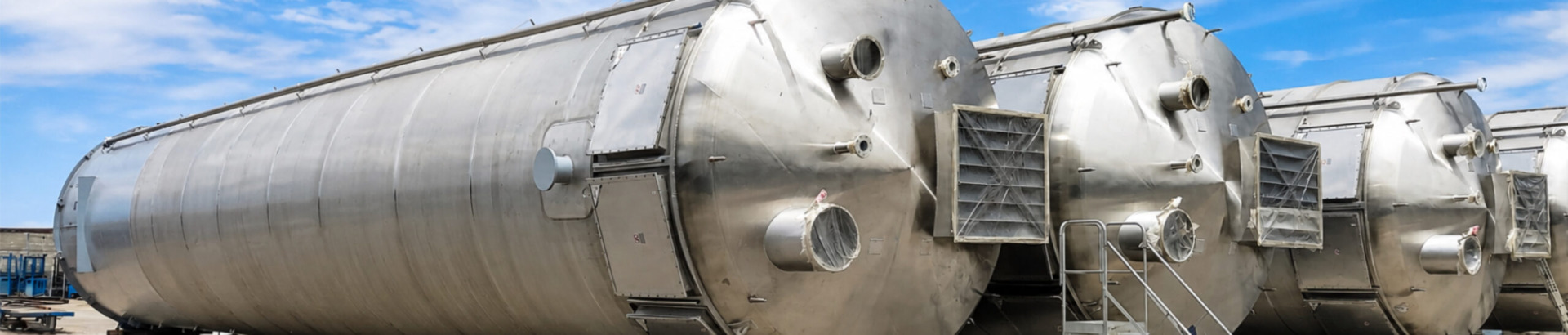




Silos
We build custom silos with a close eye on the safety that equipment for solids calls for in particular. Our silos bring together experience in calculation and, of course, in manufacturing, always hand in hand, so as to build with the rigour the powder industry demands.
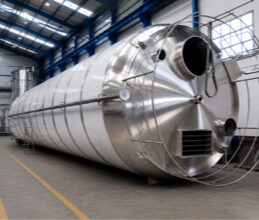
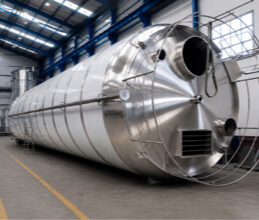
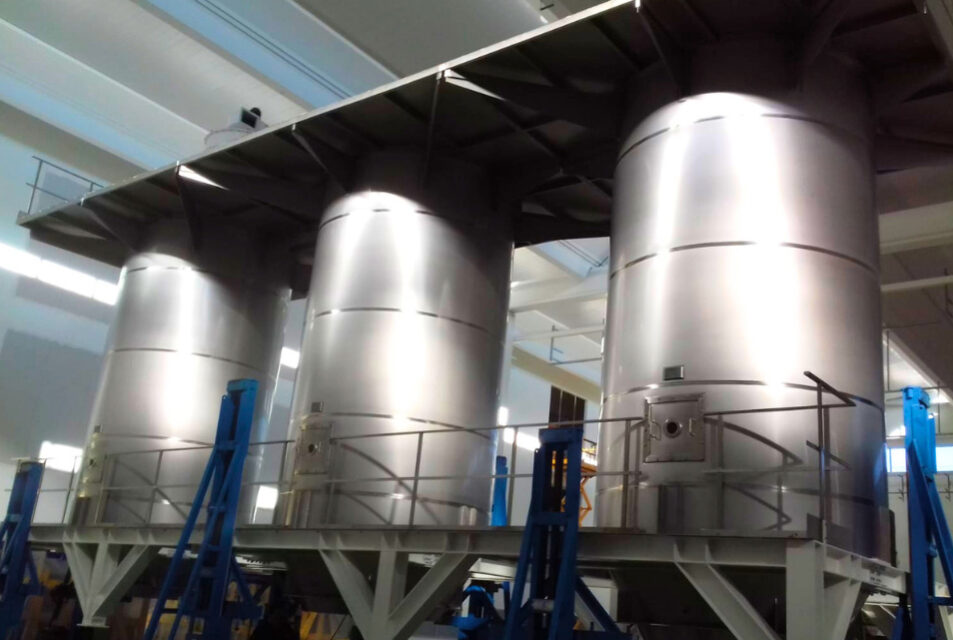
What defines our silos
We build circular or rectangular silos in carbon steel, stainless steel or duplex, in the workshop or on site, with no limit on capacity or size. We adapt internal/external finishes down to Ra ≤ 0.4 μm, mirror or satin polished. We design support on a skirt, legs, brackets or an independent structure, with calculation and CE marking to UNE-EN 1090-1 EXC2, in accordance with certificate no. 2449/CPR/AC-CU28. The design complies with UNE EN 1991-4 and UNE EN 1993-4-1, allowing for imposed, snow, wind and seismic loads under the applicable Eurocodes.
For products with a dust explosion risk, we calculate vent pressure and vent area to EN 14491 and/or NFPA 68. We supply panels, filters, level and pressure instruments, valves, vibrating bottoms, screw conveyors, vibrators and fluidisation.
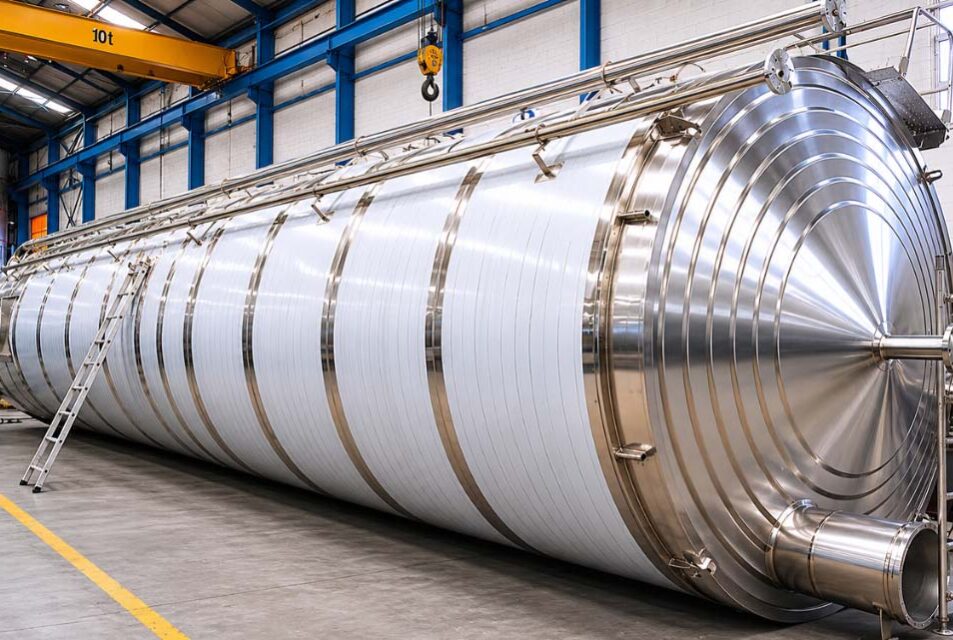
Where they are used
- Storage of food solids.
- Storage of pellets and plastic materials.
- Storage of chemical powders and granulates.
- Storage of biomass and organic by-products.
- Storage of mineral raw materials.
- Storage of bulk powder products.


Why choose our silos

We develop silos for flours, PET, pellets, flakes and solid chemicals, taking in safety, ventilation, discharge and real operating conditions.

Good manufacturing also shows in how the product falls. We take care over geometries and discharge solutions to cut down hold-up and improve the behaviour of the solid.

Every material calls for different decisions. We define the silo by density, flowability, moisture, particle size or tendency to cake, so as to fit the result more closely.

We work the silo out so that it performs well as part of the whole: structure, connections, filtration, access and maintenance, with a coherent layout in the plant.


Want to know more about our silos for solids?
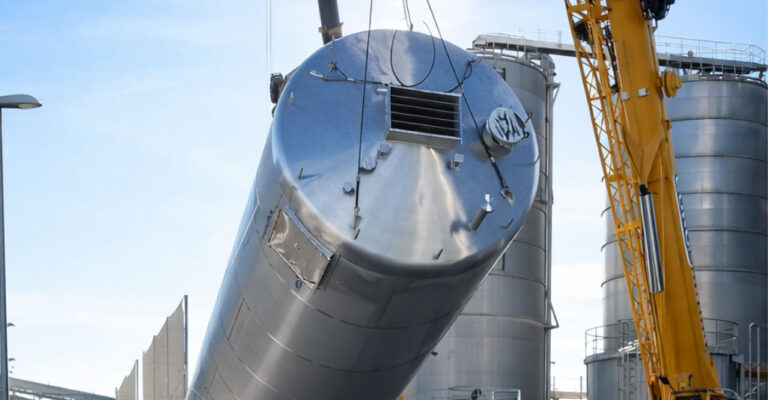
See how we design, build, transport and assemble silos made to answer every need for storing, dosing and handling solids.





Frequently Asked Questions
Yes. We build custom silos because every project brings different conditions of product, process, dimensions, available space, temperature, pressure, connections or finishes. Working this way lets us match the equipment more closely to its real application, avoid inefficient generic solutions and achieve a more precise fit in the plant. The aim is for every item of equipment to answer exactly what the client needs in their installation and in their day-to-day working process, always.
To define a silo properly we need to know the product to be stored, its density, particle size, moisture, flow behaviour, the capacity required, the working conditions, the location, the loading and discharge system, connections, finishes, access and assembly requirements. With this information we can plan a coherent build, size the equipment with judgement and avoid standard solutions that later do not perform well in the real installation.
The most suitable material depends on the product, on the environment and on the demands of the process. On many projects we work with stainless steel for its strength, cleanability and good behaviour in the food, chemical, pharmaceutical and cosmetics industries. Other steels can also be used where the application allows. The choice has to weigh corrosion, abrasion, hygiene, temperature, location and the expected service life of the equipment.
Yes. We can follow the project beyond the manufacture of the silo, coordinating transport, assembly at the plant and maintenance when the client needs it. This continuity gives better control over the process as a whole, cuts improvisation on site and makes sure the equipment arrives, is installed and is put into service in a more orderly way. Our aim is for manufacturing not to end in the workshop, but when the silo is properly integrated.
Maintenance of a silo depends on the product, the use and the working conditions, but it should include periodic inspection of the structure, supports, visible welds, openings, inspection covers, filters, valves, sensors, discharge systems and safety devices. It is also worth checking internal cleanliness, wear, corrosion, build-up and leaks. Planned maintenance helps extend the service life of the equipment and avoid unplanned shutdowns.

Want more information?
Because we know what we are “dealing with”, we offer you the confidence of taking on the design and manufacture of your silos. Will you trust us with your installation?
"*" indicates required fields