+34 967 142 011


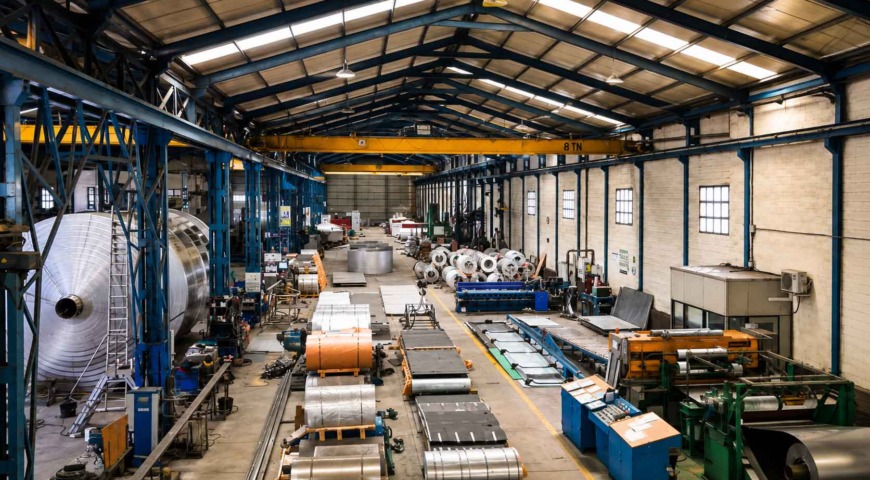
Industrial metalwork is a key discipline in process industries, as it plays a direct role in manufacturing equipment for the storage, mixing, processing and control of industrial products.
Its importance goes beyond metal construction. Good execution affects operating safety, process stability, chemical resistance, industrial hygiene, thermal efficiency and production continuity.
In sectors such as food, the chemical industry, pharmaceuticals, cosmetics, paper and pulp, water treatment or bioenergy, equipment must operate under demanding conditions. Poor manufacturing can cause premature corrosion, heat loss, cleaning problems, product build-up or unplanned downtime.
For this reason, manufacturing quality, material selection and technical judgement are decisive factors in ensuring industrial equipment that is reliable, durable and suited to each process.
At Eurocalder we develop custom-built industrial equipment for this type of environment, combining metal manufacturing, industrial experience and execution tailored to the real needs of each facility.
What is industrial metalwork in process industries
Industrial metalwork covers the manufacture of metal equipment designed to store, transform, mix, transport or treat products within an industrial plant.
In process industries, this activity includes the manufacture of equipment such as:
- Industrial vessels and tanks
- Reactors
- Silos
- Columns and towers
- Heat exchangers
- Vats
- Ancillary equipment
- Piping and conveyance systems
This equipment is usually manufactured in stainless steel or carbon steel, depending on the product, the working environment and the technical requirements of each project.
Manufacturing must adapt to variables such as working temperature, pressure or vacuum, chemical compatibility, product type, hygiene requirements, cleaning needs, maintenance conditions and the integration of the equipment into the plant.
For this reason, industrial metalwork for process industries is not just about manufacturing a metal vessel. It also means understanding how the equipment will function within the production process and what demands it will have to withstand throughout its service life.
Why manufacturing affects process performance
In many industrial facilities, the performance of a piece of equipment depends as much on its design as on the quality of its manufacture. Poorly executed welding, inadequate geometry, a substandard interior finish or the wrong choice of material can cause problems such as premature corrosion, product build-up, cleaning difficulties, dead zones, heat loss, discharge problems, structural fatigue or unplanned downtime.
In sensitive sectors, these issues have a direct impact on production, maintenance, operating safety and final product quality. For this reason, industrial manufacturing requires control over aspects such as welding procedures, documented traceability, interior finishes, material compatibility, testing, inspections, dimensional control and the correct integration of connections and fittings. In equipment subject to pressure, vacuum, thermal control or aggressive products, this technical requirement becomes even more important.
Applications of industrial metalwork by sector
Industrial metalwork has applications across numerous production sectors. While each industry has specific needs, they all share the same requirement: industrial equipment that is safe, robust and suited to the process.
Food and beverage
The food and beverage industry requires equipment where hygiene, cleanliness and process stability are priorities. In this sector, industrial metalwork usually works with hygienic stainless steel, polished finishes, hygienic design, CIP systems, thermal control and fermentation, mixing or storage equipment.
Manufacturing must make cleaning easier, prevent product build-up and reduce hard-to-reach areas. This is especially important in vessels, tanks, reactors, vats or equipment intended for contact with food products.
Chemical industry
In the chemical industry, equipment often works with aggressive products, high temperatures, pressure, vacuum or demanding service conditions. In this context, chemical resistance of materials, operating safety, structural stability, compatibility with the process and documented traceability become especially important.
Reactors, pressure vessels, mixers, columns, towers or conveyance systems are commonly found in this type of facility. Manufacturing must respond to the specific conditions of each product and the technical requirements of the plant.
Pharmaceutical and cosmetics
The pharmaceutical and cosmetics sectors require a high level of constructive precision. Aspects such as interior finishes, drainability, cleanliness, sterilisation, process validation and documentary control have a direct influence on final product quality.
For this reason, equipment manufacturing for these sectors must be carried out with particular attention to detail, both in material selection and in welding, finishes and the associated technical documentation.
Paper and pulp
The paper and pulp industry works with large volumes, continuous processes and demanding conditions. Industrial metalwork plays a role in manufacturing preparation vessels, storage equipment, reactors, vats, towers and pulp treatment systems.
In this sector, structural robustness, wear resistance and operating continuity are especially important factors, as production downtime can have a significant impact on the plant’s activity.
Water and waste treatment
In water treatment, purification or waste valorisation plants, equipment must withstand humid, corrosive environments and intensive service conditions. Manufacturing must prioritise durability, ease of maintenance, material resistance and operating reliability.
Digesters, settling tanks, reactors, storage tanks, ancillary vessels or process equipment are commonly found in these facilities.
Energy, biogas and bio-industry
The bio-industry and energy-related processes require equipment capable of working with stability under highly demanding conditions. In biogas, biomethane, anaerobic digestion or energy recovery applications, manufacturing quality has a direct influence on process continuity, operating safety and the equipment’s service life.
In these projects, industrial metalwork must combine strength, leak-tightness, technical control and adaptation to the particular conditions of each facility.
What an industrial metalwork company should offer
An industrial metalwork company focused on process industries must offer much more than manufacturing capacity. It must also provide technical judgement, industrial knowledge, adaptability and an understanding of how a plant really operates.
In complex industrial projects, it is important to have a capable supplier able to integrate custom manufacturing, engineering, technical coordination, documentation, transport, assembly and integration on site.
The sector experience also makes an important difference, because each industry has different needs. A vessel for the food industry does not require the same as a chemical reactor, a vat for the paper industry, a water treatment tank or a piece of equipment for biogas.
The importance of traceability and documentary control
Industrial traceability is a fundamental aspect of many metalwork projects. Depending on the sector, the type of equipment and the service conditions, it may be necessary to control materials, certificates (such as the ISO certificate), welds, inspections, testing, finishes, procedures and technical documentation.
This control makes it possible to validate processes, strengthen regulatory compliance and increase operating safety. In sectors such as the chemical or pharmaceutical industries, or in pressure equipment, traceability and documentary control form an essential part of the project.
Industrial manufacturing built to last
In process industries, the real cost of a piece of equipment does not depend solely on its initial manufacture. Its in-service behaviour, ease of maintenance, operating stability and service life also play a part.
Well-executed industrial manufacturing helps reduce incidents, ease maintenance, improve plant integration and increase process continuity. For this reason, industrial metalwork must be understood as a strategic part of how a production facility operates.
At Eurocalder we manufacture custom-built industrial equipment for process industries where reliability, traceability and technical execution have a direct impact on plant performance. If you need to develop industrial equipment tailored to your process, you can contact our technical team.