+34 967 142 011


Waste recovery is the operation by which waste serves a useful purpose by replacing other materials, or is prepared to do so, as defined by Law 7/2022. Treating waste or extracting a small amount of material from it is not enough: the main result of the operation must be its use.
This article explains what recovery is, what types exist, how the industrial process is organised, and what equipment is involved, with particular attention to organic waste.
What is waste recovery?
Law 7/2022, on waste and contaminated soils for a circular economy, defines recovery as the operation whose main result is that waste serves a useful purpose. Annex II of the law sets out a non-exhaustive list of recovery operations, identified by codes R01 to R13.
Where recovery sits in the waste hierarchy
Spanish law and the Waste Framework Directive set out an order of priority that should not be treated as interchangeable: prevention, preparation for re-use, recycling, other recovery – including energy recovery – and, lastly, disposal. Energy recovery ranks below recycling, and any departure from this order must be justified by the overall environmental outcome across the life cycle.
Recovery, recycling and disposal: differences
| Operation | Main result |
| Recycling | Obtaining materials or substances for a new use |
| Energy recovery | Obtaining energy or fuel |
| Other recovery | Giving waste another useful purpose |
| Disposal | Permanently removing waste from the material cycle |
All recycling is a recovery operation, but not all recovery is recycling. Recovery should also not be confused with the mere collection or transport of waste, which form part of its management but do not guarantee its final use.
Types of waste recovery
Material recovery includes transformation operations such as metal recovery, solvent or oil regeneration, composting and preparation for re-use, all aimed at obtaining new materials.
Energy recovery covers using waste as fuel, producing energy through combustion, and making use of biogas or biomethane. A common example of recovery, depending on the type of waste treated, is incineration with energy recovery, which only counts as recovery when its main result is genuinely energy-related.
Simplifying recovery into just these two general categories is common, but Law 7/2022 breaks it down into 13 distinct operations (R01-R13), and not all material recovery amounts to recycling.
How recovery is carried out: the industrial process
The process typically includes: identifying and characterising the waste (origin, composition, moisture, calorific value), separation at source, collection and storage, pre-treatment (sorting, shredding, screening, homogenisation), the recovery treatment itself (mechanical, physical, chemical or biological), conditioning of the resulting product and, finally, its return to the market as secondary raw material, compost, biogas or energy.
Rejects generated at any stage require further recovery or controlled disposal.
Recovery of organic waste
Organic waste is mainly recovered through composting, anaerobic digestion and biogas or biomethane production, with additional nutrient recovery where the final destination allows it. Anaerobic digestion requires vessels and reactors with temperature control and constant agitation to keep the biomass active, conditions that also apply to fermentation in other industrial processes.
Recovery by type of waste
The plastics are sorted by polymer, shredded and washed before extrusion and pelletising, leaving energy recovery for non-recyclable fractions; plastics recycling is one of the most technologically advanced areas today.
Metals are recovered through magnetic separation or eddy current separation. Paper and cardboard are separated, shredded and defibred to produce recycled pulp. Sludge and liquid waste are homogenised, thickened and dewatered before physico-chemical treatment or digestion.
Appropriate waste management for each material depends on the quantity of waste generated and the variability of its composition.
Industrial equipment in waste recovery
| Stage | Related equipment |
| Reception and storage | Hoppers, vessels and silos |
| Homogenisation | Agitated vessels and reactors |
| Digestion or fermentation | Reactors and fermenters |
| Thermal control | Jackets, coils and heat exchangers |
| Transfer | Pipework, pumps and valves |
| Storage of recovered product | Final silos and vessels |
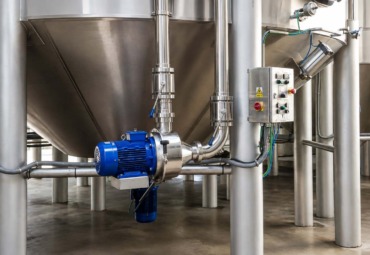
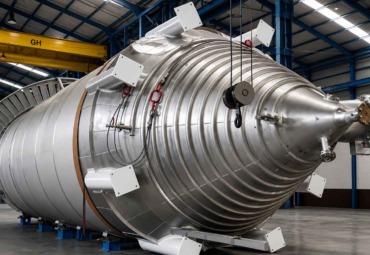
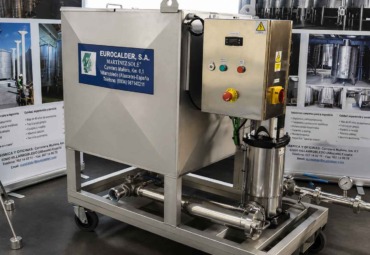
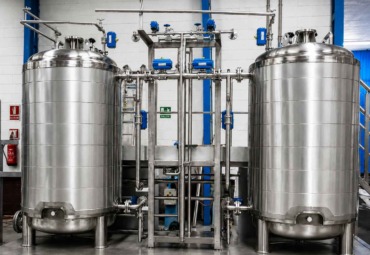
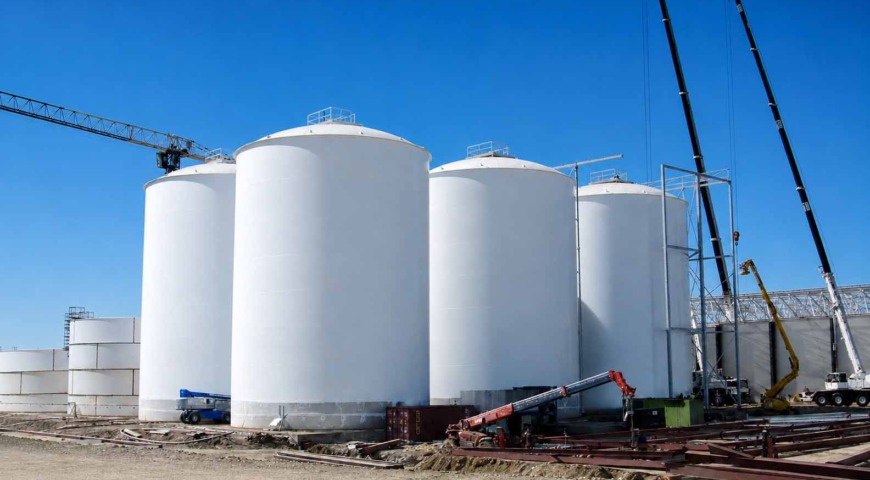
At Eurocalder we manufacture vessels and tanks, reactors and industrial silos adapted to these stages, as well as fittings such as agitators and pipework integrated with the rest of the process.
Technical variables that shape the design
Equipment for waste must be adapted to the state of the waste (solid, liquid, sludge or suspension), its moisture content, density, viscosity, particle size, abrasiveness, corrosiveness and variability of composition, as well as the possible formation of gases and biological risk. There is no standard vessel valid for any waste: the composition and intended treatment determine the material, geometry, agitation and discharge system.
By-product and end-of-waste status
A by-product is a substance resulting from a production process that may not be considered waste if it meets the relevant legal conditions: it never acquires that status. A material, on the other hand, reaches end-of-waste status when, after a recycling or recovery operation, it meets the technical and legal requirements for a specific use and does not produce adverse impacts.
The key difference is that a by-product was never waste, while the latter was.
Benefits and limits of recovery
Recovery reduces landfilling, the extraction of raw materials and certain environmental impacts, as well as recovering materials and energy, and it is a central part of any sustainability strategy in waste management. But it is not automatically sustainable: energy consumption, transport, emissions, water and reagent use, and the reject rate must be assessed case by case before presenting an operation as environmentally beneficial without qualification.
Regulations and traceability
Law 7/2022 requires treatment operations to be correctly identified using R codes, and regulates waste classification, the authorisation of waste managers and facilities, transfer documentation and producer responsibility. The specific requirements depend on the waste, the operation, the autonomous community and the facility, so this should not be treated as a definitive legal guide.
Design and manufacture of equipment for waste recovery
At Eurocalder we design and manufacture vessels, reactors and silos for recovery processes in sectors such as chemicals and process, water treatment, organic waste, paper and pulp and energy and renewables.
Do you need a vessel, reactor or silo for a waste recovery process? Request technical advice.
Frequently asked questions
What is waste recovery?
It is the operation by which waste serves a useful purpose, replacing other materials or being prepared to do so, under Law 7/2022. It is not just any treatment: the main result of the operation must be putting the waste to use, whether as material or as energy.
What is the difference between recycling and recovery?
All recycling is a form of recovery, but not all recovery is recycling. Recycling transforms waste into materials or substances for a new use; other forms of recovery, such as energy recovery, give waste a different useful purpose, such as producing fuel or energy.
What types of recovery exist?
The main distinction is between material recovery, which recovers substances or objects for a new use, and energy recovery, which uses waste as fuel or to produce energy. Law 7/2022 breaks these categories down into more specific operations using codes R01 to R13.
What waste can be recovered?
Practically any waste can be recovered if a suitable process exists: organic waste through composting or anaerobic digestion, plastics through mechanical or chemical recycling, metals through recovery, paper through recycled pulp production, and sludge through physico-chemical treatment or digestion.
What equipment is involved in organic waste recovery?
Vessels and reactors with agitation and temperature control for anaerobic digestion, silos for storing raw material or recovered product, and pipework for transfer between stages. The equipment must be adapted to the moisture content, composition and variability of the waste treated.
Summary
- Recovery requires waste to serve a useful purpose, replacing other materials; treating it is not enough.
- It ranks below recycling in the waste hierarchy, and disposal is always the last resort.
- The process combines characterisation, pre-treatment, recovery treatment and return to the market.
- Each waste type and each stage requires different equipment: vessels, silos, reactors, agitators and thermal systems.
- Recovery is not automatically sustainable: energy consumption, transport and the reject rate must be assessed.